

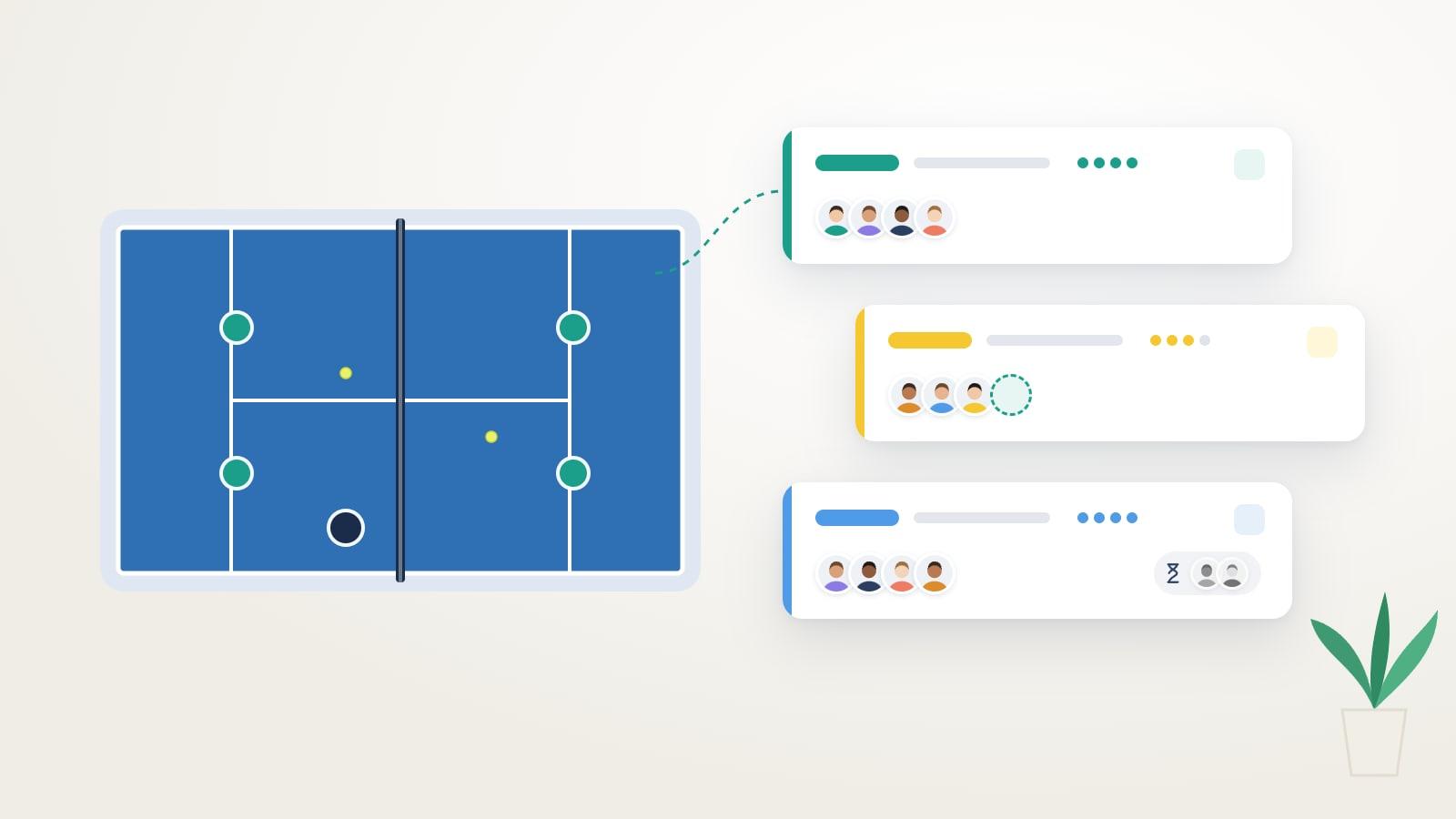
A padel school organizes its groups by level well when each group has a level, a category and a fixed number of places, and every absence becomes a free spot taken by another student at that same level. The student who has a class to make up sees in their app only the classes at their level and category, and gets a notification as soon as a spot frees up in one of them.
This matters more than it seems. Spain has around 17,000 courts and almost 4,500 clubs, according to the federation’s 2024 figures, and the Global Padel Report 2026 considers the court-building stage over: now the winners are those who get the most out of the courts they already have. The same report puts the most efficient clubs at around €3,500 per court per month, compared with €736 for the least efficient. In a school, a good part of that difference lies in the places that stay empty.
What does a padel school lose when a student misses a class?
It loses twice. The court and the coach cost the same with three students as with four, so that empty place is money you have already paid. And if your school offers make-ups, you also owe that student a class.
An example: a school with 30 groups of 4 students where one in ten misses each week has 12 empty places and 12 classes to make up every week. If each student makes up their class in the place another student at their level has left free, the two cancel out: the place is filled and the class is given back without opening new hours. If not, by the end of the term the school can owe up to 156 classes.
That is why, in a school organized by level, every free place should go to someone at that level who has a class to make up.
What padel levels are there and what is a group’s category?
The best-known scale goes from 1 to 7, from the player who is just starting out to the professional. Many booking apps and leagues use it, so your students already arrive saying "I’m a 3". Other leagues use letters and many schools use their own names or colors. For your school, the scale that counts is the one your coaches use, always the same one and recorded on each student’s profile, not in the head of whoever gave them their first class.
Level alone is not enough to sort the groups. Many schools also split them by category: kids or adults, competition or amateur, women’s, men’s or mixed. Two groups at the same level but in different categories are not interchangeable for a make-up class, and the system has to know that.
How do you make up a class without unbalancing the groups?
With a simple rule: make-up classes only happen in groups at the same level and in the same category. If students can make up a class wherever there is room, they will end up in whichever group suits their timetable best, and that group becomes unbalanced. It is one of the most repeated complaints in padel forums in Spain: the student asking for "a level 5 group" because theirs has dropped.
On top of that rule, decide and write down three things in your make-up class policy:
- Minimum notice: how many hours in advance they have to let you know to earn the make-up class. Many schools ask for 24 hours.
- Expiry: how long they have to use it. One term stops classes piling up from one season to the next.
- Maximum pending: how many make-up classes they can have at the same time.
In how to manage make-up classes without WhatsApp you will find each rule in detail.
How does the student find out there is a free spot?
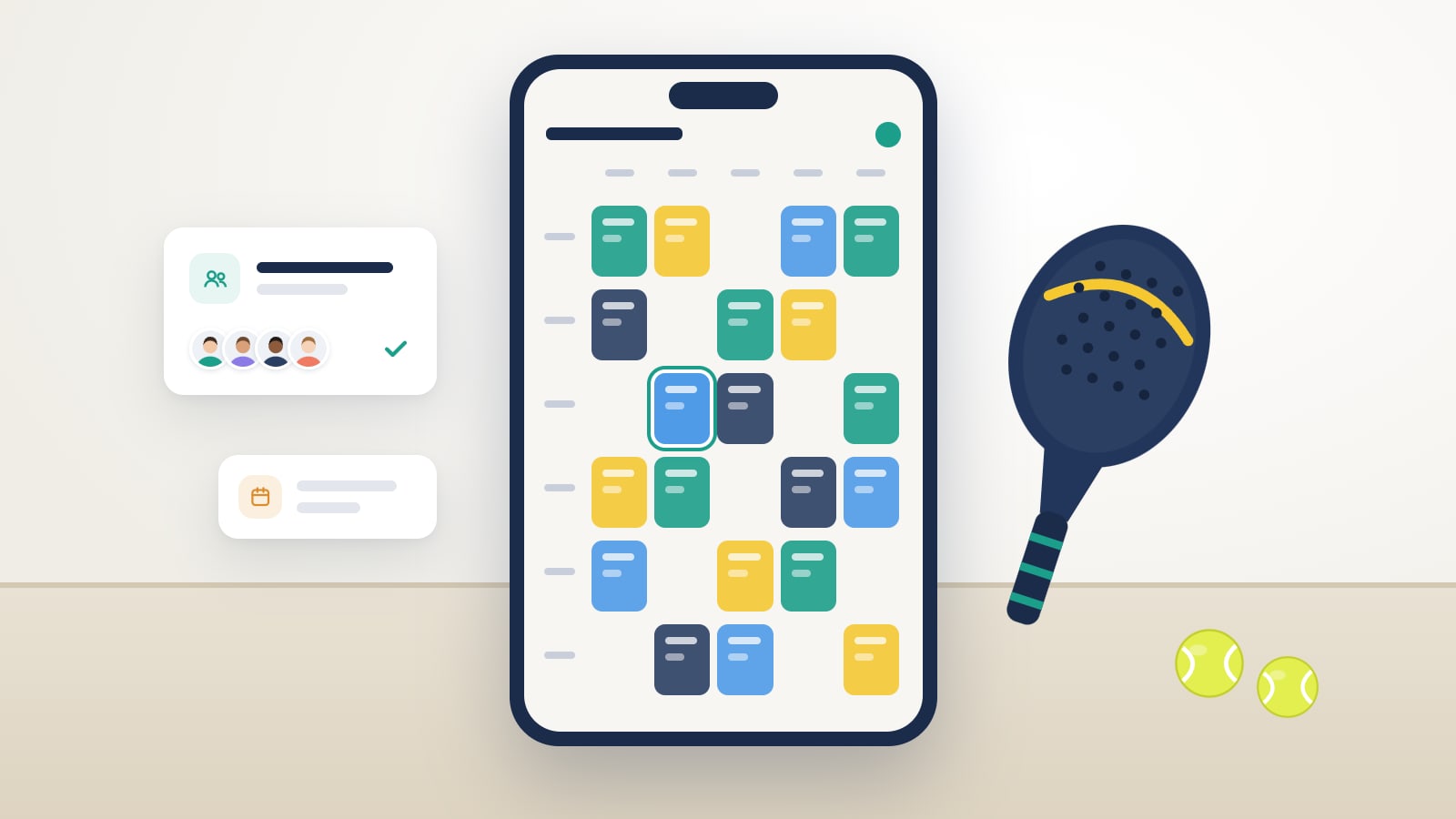
With a notification on their phone the moment it frees up. If the spot is announced in the school’s WhatsApp group, students of every level see it, the ones who cannot make it ask anyway and the coach ends up acting as a switchboard. If it is not announced, it is lost.
In Clasbi, when a student reports that they will not come, the students at that level and category who have a class to make up get a notification in their app. The first one to request the spot takes it, the make-up class is deducted from their balance and nobody goes over capacity. The class runs full and nobody has had to write a single message.
When should you open a new group?
When the numbers tell you to, and there are three worth checking every month:
- Waiting list for a level: if at one level and time slot there are as many students waiting as a group has places, the group is already full before you open it.
- Pending make-up classes by level: if they pile up at one level, that level has too few groups or too few time slots to make up classes in.
- Places empty for weeks: a group that has had one or two free places for a month is a candidate to merge with another group at its level at the next group change.
Group changes work best on fixed dates, for example every term, when the coaches review their groups and say who moves up or down a level.
How do you run all this with Clasbi?
In Clasbi for padel and tennis schools each group has a level, category, timetable, coach and capacity, and each student has their balance of make-up classes.
| Situation | With Excel and WhatsApp | With Clasbi |
|---|---|---|
| A student says they will not come | They message you and you note the make-up in a notebook | They report it from their app and, if it is in time, earn the make-up class |
| A spot opens up in a group | You announce it in the WhatsApp group or it is lost | Students at that level with a pending make-up class get a notification |
| A student wants to make up a class | You search by hand for a class at their level with room | Their app shows them only the classes at their level and category with room |
| A group is full | You tell them no and forget to let them know later | The request never goes over capacity and stays on the waiting list |
If it rains and you cancel a class, the group gets the notice instantly; we cover it in how a padel school handles absences, rain and fees. For a new student’s first day, see how to organize trial classes, and if you have several coaches, how to run an academy with several teachers.
Clasbi costs €5 per coach per month, plus a commission on the automatic payments you collect through Clasbi, after 3 free months and with no lock-in. A school with six coaches pays €30 a month in fixed fees. We start with a 30-minute call, move your students, groups and levels over from whatever Excel file or notebook you use, and the school is up and running in 72 hours. You can find the rest of the features in our academy management software. In how much academy management software costs we compare this price with other models.